Navratri is one of the most auspicious festivals celebrated with great enthusiasm and vigour across the country of India. The festival, dedicated to Goddess Durga and her nine forms, signifies victory over evil and the power of faith, courage, prosperity, and positivity. Navratri is a nine-day festival during which the Durga Puja is performed to worship Maa Durga, observing fasts and prayers, and participating in Garba and Dandiya celebrations in great enthusiasm. One of the most popular cultural traditions of Navratri is to wear different colours every day. Each day has its own story, symbolism, and meaning. In addition, every colour has a unique importance, representing various elements of faith, bravery, prosperity, and positivity. The tradition of following the 9 Colours of Navratri has become more popular as people have started celebrating this festival with increased enthusiasm and excitement.
If you are searching for the 9 Colours of Navratri, let us help you learn the significance of colors, days, and their implementation.
What Are the 9 Colors of Navratri?
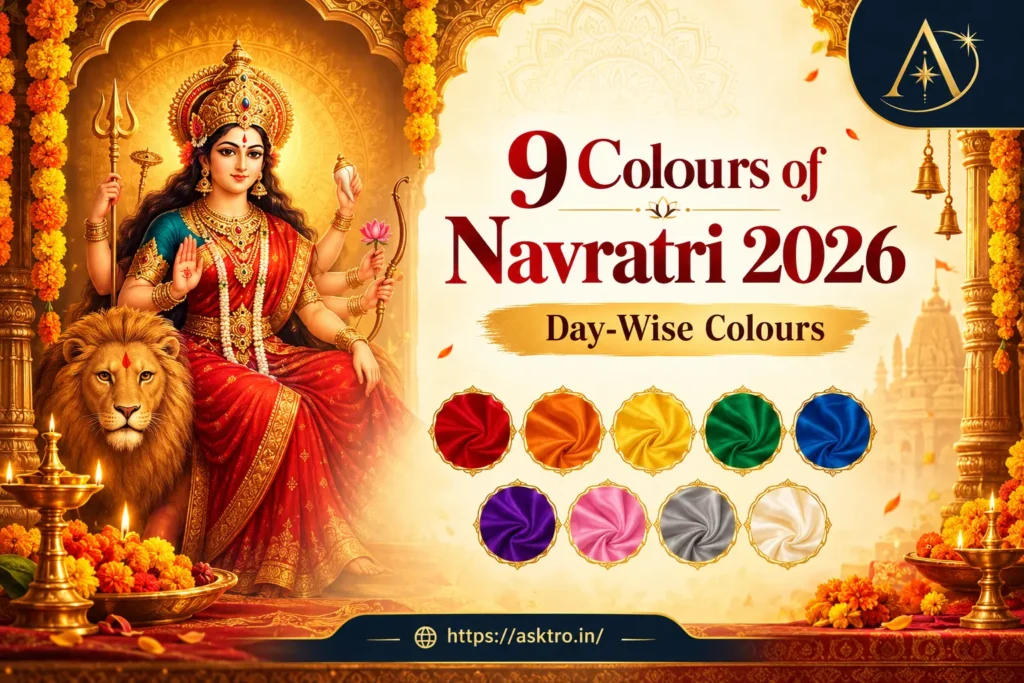
The 9 Colours of Navratri symbolize different aspects of Goddess Durga’s nine forms, known as Navdurga. Devotees express their faith and devotion to the goddess by wearing different colored outfits on different days of Navratri. The colors also play a vital role in adorning, decorating, and arranging the puja altar. The traditional colors of the Navratri festival may vary from year to year as the festival days begin on a different weekday. So the color corresponding to each date may vary from year to year.
Below is a day-wise list of common colors that are a part of the traditional Indian festive season of Shardiya Navratri 2026 in the country.
| Day | Color | Meaning |
| 1 | Yellow | Happiness |
| 2 | Green | Prosperity |
| 3 | Grey | Balance |
| 4 | Orange | Enthusiasm |
| 5 | White | Peace |
| 6 | Red | Power |
| 7 | Royal blue | Confidence |
| 8 | Pink | Love |
| 9 | Purple | Spirituality |
These are the most common colors associated with the nine-day Navratri festival in India. However, you may find slight variations in these colors based on the local customs and the color calendar 2026 for the Navratri festival.
Day 1: Yellow – Celebrating Happiness and Optimism
Yellow is a color of happiness, optimism, and enthusiasm. It signifies the positivity and brightness of the Sun. Yellow is an excellent color to choose if you are looking forward to celebrating Navratri by welcoming good vibes and fortune. Devotees fasting and praying on the first day of Navratri worship Goddess Shailputri – the first form of Goddess Durga. They pray to the goddess for power and strength to overcome challenges and lead a pious life.
You can opt for a yellow saree, kurta, or salwar suit to keep the color theme consistent with the day’s significance. Flowers and simple decorations in yellow could also bring a positive vibe to your puja area at home.
Spiritual Significance: Yellow color signifies optimism and enthusiasm to embrace a new life ahead.
Day 2: Green – Welcoming Growth and Prosperity
Green is a color of nature, peace, harmony, and prosperity. It symbolizes balance and growth and brings positive changes into your life. Devotees who wish to invite prosperity and positivity for the entire year observe the second day of Navratri by offering prayers to Goddess Brahmacharini – the second form of Goddess Durga. The goddess is believed to have attained prosperity through penance. Yellow is an excellent color to choose if you are looking forward to celebrating Navratri by welcoming good vibes and fortune. Devotees fasting and praying on the first day of Navratri worship Goddess Shailputri – the first form of Goddess Durga. They pray to the goddess for power and strength to overcome challenges and lead a pious life.
You can opt for a yellow saree, kurta, or salwar suit to keep the color theme consistent with the day’s significance. Flowers and simple decorations in yellow could also bring a positive vibe to your puja area at home.
Spiritual Significance: Yellow color signifies optimism and enthusiasm to embrace a new life ahead.
Day 3: Grey – Seeking Balance and Stability
The grey color is the combination of black and white colors. It is a neutral color, representing neutrality, peace, composure, and control. Although grey is not a bright color, it radiates the strength of calmness and stillness to overcome the harsh situations of life.
The third day of Navratri is dedicated to Goddess Chandraghanta – the third form of Goddess Durga. She is worshipped for her power, valor, and ability to ward off evil from the surroundings. Devotees observe this day with a prayer for removing negativity from their lives while seeking the goddess’s blessings for staying strong and composed.
You can wear grey sarees and suits as grey clothing offers a unique blend of elegance and style for the festivity. The color also complements the lehenga and kurtas for men and women, making it an ideal choice for Navratri.
Spiritual Significance: Grey color signifies the ability to overcome the difficult times of life with calmness and peace.
Day 4: Orange – Embracing Enthusiasm and Courage
The color orange symbolizes enthusiasm, courage, creativity, and positive vibes. It is an exciting and enthusiastic color to celebrate Navratri with increased positivity and power. Devotees observe the fourth day of Navratri by worshipping Goddess Kushmanda – the fourth form of Goddess Durga. She is believed to have created the universe through her smiling glances and immense vigor and energy.
You can embrace the vibrancy of the color orange in the form of lehenga, kurta, saree, or traditional dress to keep the festive spirit alive throughout the day. The color also enhances the visual appeal of your puja decoration and offerings.
Spiritual Significance: The color orange signifies enthusiasm and positivity to embrace life with power and courage.
Day 5: White – Invoking Peace and Serenity
White color signifies peace, serenity, positivity, and spiritual enlightenment. It represents the calmness of the mind and the purity of the heart. Devotees observe the fifth day of Navratri by worshipping Goddess Skandamata – the fifth form of Goddess Durga. She is the mother of Lord Kartikeya and is believed to have brought compassion and mercy to the world.
You can embrace the simplicity and purity of the white color in the form of ethnic wear, saree, or dress to keep the festivity consistent with the day’s significance. You can also decorate your puja area with white flowers to bring a feeling of calmness and peace.
Spiritual Significance: The white color signifies inner peace and serenity to embrace life with compassion and mercy.
Day 6: Red – Seeking Power and Devotion
Red color signifies power, valor, devotion, auspiciousness, and positivity. It is the favorite color of Goddess Durga as it represents her heroic acts and fearlessness. Devotees observe the sixth day of Navratri by worshipping Goddess Katyayani – the sixth form of Goddess Durga. She is believed to have destroyed evil forces, bringing peace and prosperity to the world. Devotees observe this day by seeking the goddess’s blessings for power, strength, and courage to fight hard times.
You can embrace the power of the red color in the form of sarees, lehenga, suits, or traditional accessories for men and women. The color adds vibrancy and positivity to your festive outfit.
Spiritual Significance: The red color symbolizes the power and bravery to defeat all odds of life.
Day 7: Royal Blue – Seeking Confidence and Elegance
The royal blue color signifies confidence, elegance, faith, and positivity. It is one of the most favorite colors to embrace the festivity of Navratri as it enhances the visual appeal of the traditional attire.
The seventh day of Navratri is dedicated to Goddess Kalaratri – the seventh form of Goddess Durga. She is known to have slain demons and brought light to the world. Even though the goddess has a dreadful form, she is worshipped for her ability to protect her devotees from all evils. Devotees observe this day by seeking the goddess’s blessings for confidence and faith to overcome all obstacles of life.
You can complement the royal blue sarees and kurtas with silver or golden accessories to enhance the elegance of the traditional outfit.
Spiritual Significance: The royal blue color signifies confidence and faith in the power of Goddess Durga.
Day 8: Pink – Embracing Love and Affection
The pink color symbolizes love, affection, harmony, and compassion. It is an excellent color to bring positivity and peace into your life by embracing the virtues of kindness and gentleness. Devotees observe the eighth day of Navratri, also known as Durga Ashtami, by worshipping Goddess Mahagauri – the eighth form of Goddess Durga. She is believed to have blessed her devotees with prosperity and happiness.
Many devotees observe this day by performing special puja rituals and Kanya Puja for the well-being of girls in their families. You can opt for ethnic wear in pink or complement your traditional outfit with pink accessories to keep the festivity consistent with the day’s significance.
Spiritual Significance: The pink color signifies the importance of expressing love and affection to attain happiness in life.
Day 9: Purple – Welcoming Spirituality and Wisdom
The purple color signifies spirituality and wisdom. It is an excellent color to embrace the positive vibes of Goddess Siddhidatri – the ninth form of Goddess Durga. She is believed to have blessed her devotees with infinite wisdom and powers. Devotees observe this day by worshipping the goddess with special prayers and offerings. They also conclude the nine-day festival with great enthusiasm and excitement by organizing community events and festivities.
You can embrace the beauty of the purple color by wearing a saree, kurta, or traditional dress. It complements the elegance of your ethnic outfit to enhance the visual appeal of your festive look.
Spiritual Significance: The purple color signifies the quest for achieving higher levels of spirituality in life.
Why Are Colors Important During Navratri?
Colors are an important aspect of the Navratri festival as they enable the devotees to align their thoughts and actions with the positive vibes of Goddess Durga. Here are some reasons why people follow the tradition of following the nine colors of Navratri:
1. Express Devotion to Goddess Durga:
Wearing the color on the day of Navratri offers a unique platform to express your devotion to Goddess Durga. It also helps you remember the significance and symbolism of the day.
2. Embrace Positivity:
The color signifies the positive vibes of the day, offering an excellent opportunity to embrace new thoughts and ideas for your life.
3. Bring Families and Communities Together:
Navratri is a festival of families and communities as people come together to celebrate the event in great enthusiasm and excitement. Following the day’s color keeps everyone engaged in the festivity.
4. Pass on Cultural Traditions:
The tradition of following the 9 Colours of Navratri keeps the next generations connected to their cultural roots. It also allows them to pass on their traditions to their younger ones while sharing the significance of Navratri days.
How to Celebrate Navratri According to the Nine Colours?
You can follow the tradition of following the 9 Colours of Navratri without spending much on expensive clothes and accessories.
- Choose traditional outfits in the color mentioned for the day.
- Decorate your puja area with flowers, decor, and gifts as per the day’s significance.
- Perform rituals as per your family tradition and local customs.
- Organize community events and participate in Garba and Dandiya events.
- Embrace the day’s positive vibes and values to enhance your life.
Remember that you are not following the tradition of the color of the day to please Goddess Durga. Your devotion and faith in the goddess would enable you to derive maximum benefits from the festival.
Conclusion
The 9 Colours of Navratri bring vibrancy and excitement to one of the most cherished festivals of the country. From yellow, signifying happiness, to purple, representing spirituality and wisdom, these colors offer an excellent platform to enhance the festivity of Navratri. Understanding the 9 Colours of Navratri in India can help you organize your festive events according to the day’s significance to derive more benefits from the festival. Each year, the color of the day may vary as the festival begins on a different weekday. So, it is essential to verify the date-based color list before organizing your daily events for Navratri 2026.
At Asktro Pvt Ltd, we believe that learning about the spiritual practices could help you make the best out of the festive events. Navratri is one such festival that allows you to enhance your faith, invite positivity, pay respects to the divine feminine, and spread happiness and prosperity. May Maa Durga bless you and your family with happiness, prosperity, good health, and courage to embrace life with positivity and peace!